Are Factory Arms Robots Without AI?
Industrial robotic arms often lack AI or learning systems. Are they still robots? We analyze factory arms using the Sense–Think–Act framework and settle the debate.
Robot Conundrum
11/11/2025
The Most Iconic Robot That Doesn't Seem Very Smart
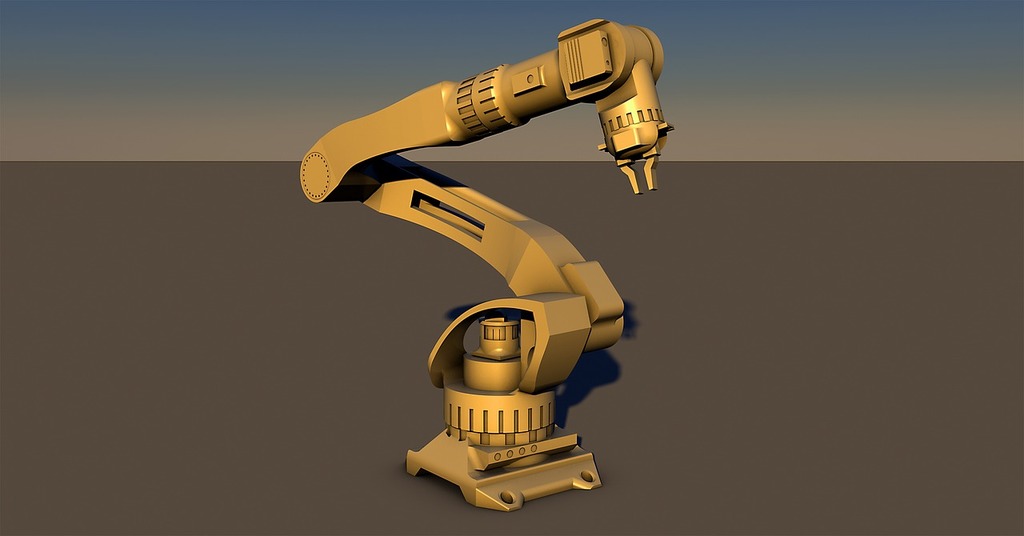
When most people hear the word “robot,” they picture a factory arm. A steel limb bolted to the floor, swinging with precision, welding car frames or stacking boxes at superhuman speed.
And yet, these machines often raise an eyebrow when we look closer. They don't chat. They don't learn on the job. Many of them repeat the same motion thousands of times a day without ever changing their mind.
So here's the core question: if a machine has no artificial intelligence, no learning, and no awareness beyond its task, can it still be a robot? Or are factory arms just sophisticated automatons wearing the robot label out of habit?
First, Do Robots Need AI?
Despite what movies and marketing suggest, AI is not a requirement for being a robot.
At Is It a Robot?, we use a practical engineering definition built around the Sense–Think–Act cycle. A robot does not need to learn, reason abstractly, or mimic human thought. It needs to close this loop autonomously.
The Case For Factory Arms Being Robots
Act: They Clearly Manipulate the Physical World
This is the easiest box to check.
Industrial arms:
- Move with multiple degrees of freedom
- Apply precise force and torque
- Weld, cut, assemble, paint, and lift
If physical action were the only requirement, the debate would end here.
Sense: More Than Just Blind Motion
Early factory arms were essentially blind, following fixed paths regardless of what happened around them. Many modern arms are different.
Depending on the application, a factory arm may include:
- Position encoders in each joint
- Force and torque sensors
- Vision systems to locate parts
- Safety sensors to detect human presence
Even something as simple as knowing its own joint angles is a form of sensing. The arm is aware of its state, even if it's not aware of the wider world.
Think: Decision-Making Without Intelligence
This is where people get tripped up.
Factory arms usually do not “think” in the human sense. But they do:
- Calculate motion paths
- Adjust speed based on load
- Respond to sensor feedback
- Stop or reroute when something is wrong
This is decision-making, even if it is deterministic and rule-based. Intelligence does not have to be clever to be real.
The Case Against Factory Arms Being Robots
Most Run Predefined Scripts
Many factory arms follow preprogrammed trajectories. If nothing unexpected happens, they behave exactly the same way every time.
In these cases, the arm is closer to a programmable automaton than an adaptive robot.
Limited Awareness of the World
A factory arm usually knows very little about its environment.
It often does not know:
- What object it is holding
- Why it is performing a task
- What happens after it finishes its motion
Its “world” is constrained to joint angles, forces, and timing.
No Learning or Goal Flexibility
Most industrial arms do not learn from experience. They do not improve technique or redefine success. Their goals are locked in by human programmers.
That makes them feel mechanical rather than autonomous.
The Gray Area: Control Systems vs Autonomous Robots
Factory arms sit on a spectrum.
On one end are arms that:
- Follow fixed paths
- Ignore variation
- Shut down when something changes
These systems are closer to automatons.
On the other end are arms that:
- Use vision to locate parts
- Adjust grip force dynamically
- Work safely alongside humans
These systems clearly close the Sense–Think–Act loop and earn the robot label, even without AI.
Verdict: Are Factory Arms Robots Without AI?
So, are factory arms robots?
Verdict: Yes — But Often Very Simple Ones
A factory arm does not need artificial intelligence to be a robot. If it senses its state, processes information, and acts autonomously based on feedback, it qualifies.
However, not every factory arm deserves the title equally. Some are barely beyond automatons. Others are sophisticated robotic systems hiding behind boring industrial enclosures.
What This Debate Reveals About Robots and AI
We've been taught to equate robots with intelligence and intelligence with AI. In reality, robotics existed long before modern AI and will continue without it.
Robots are about action under control. AI is about reasoning under uncertainty. They overlap, but they are not the same thing.
Factory arms remind us of an important truth: the world's most productive robots are often the least conversational ones. They don't think like us. They don't need to.
They just need to sense enough, decide enough, and act reliably enough to get the job done.