Are Satellites Robots? Machines That Think While Orbiting Earth
Satellites sense, think, and act hundreds of miles above Earth. Does that make them robots? We analyze satellites using the Sense–Think–Act framework.
Robot Conundrum
11/27/2025
The Robots You Never See but Rely On Daily
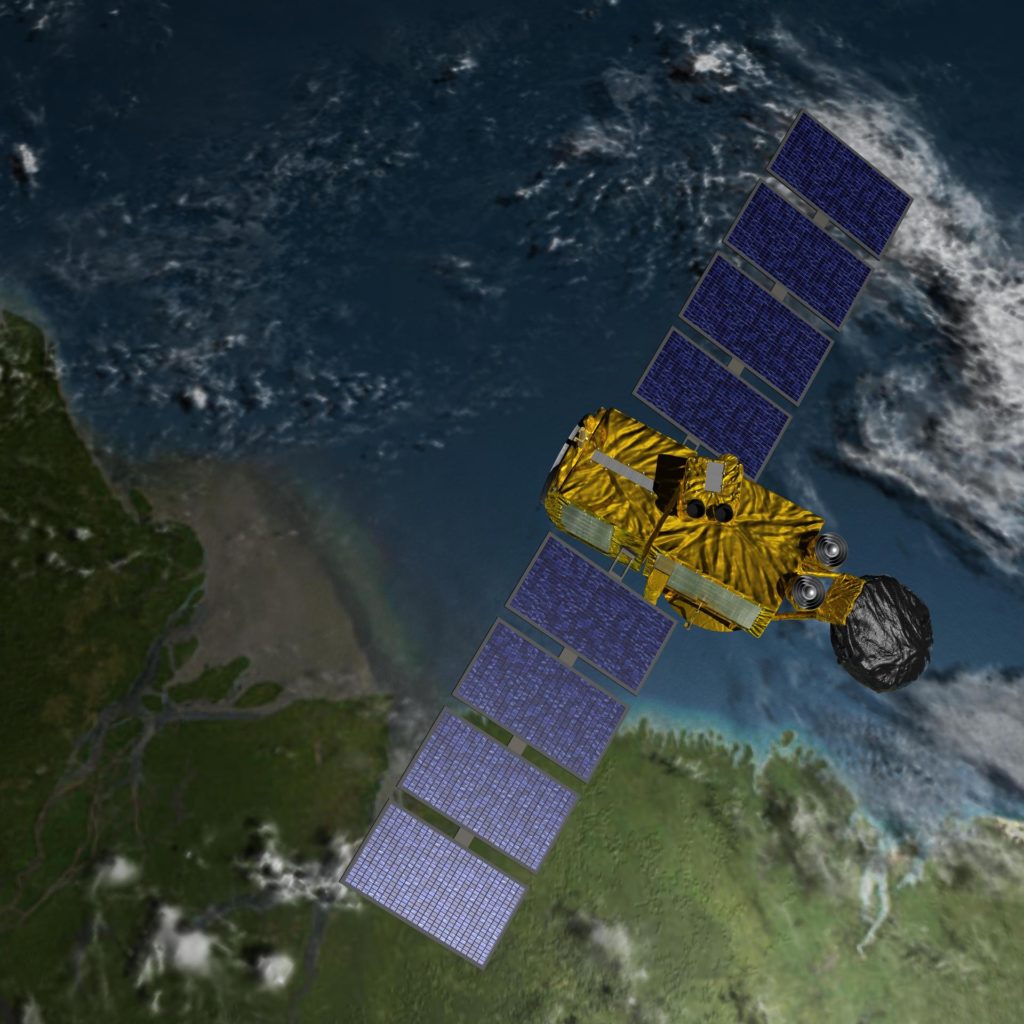
Satellites don't look like robots in the way people usually imagine them. They don't have faces. They don't roll around. Most of them don't even move in ways you can see from the ground.
And yet, satellites photograph Earth, route your phone calls, guide airplanes, predict weather, track ships, and tell your phone exactly where you are standing right now. They do all of this while hurtling through space at thousands of miles per hour, largely unattended, sometimes for decades.
That raises an important question: if a machine operates autonomously, senses its environment, makes decisions, and acts without human intervention—does it count as a robot? Satellites may be the most overlooked robot candidates we have.
At Is It a Robot?, we don't require humanoid shapes or science fiction behavior. We evaluate machines using the Sense–Think–Act cycle. A device that closes this loop independently starts to look very robot-like, even if it never touches the ground.
The Case For Calling Satellites Robots
Sense: Satellites Are Packed With Sensors
Sensing is a satellite's primary job.
- Optical cameras capture images of Earth and space
- Infrared sensors measure heat patterns
- Radar systems map terrain through clouds
- Star trackers determine orientation in space
- Gyroscopes and accelerometers measure motion
Whether monitoring weather systems, spying on military activity, or mapping crop health, satellites are constantly perceiving their environment.
Think: Decisions Made Far From Earth
Because satellites are so far away, they cannot rely on constant human control. Communication delays and limited bandwidth make real-time joystick operation impossible.
Instead, satellites make onboard decisions such as:
- When to capture images
- How to orient solar panels toward the sun
- How to stabilize themselves if they start tumbling
- When to enter low-power “safe mode”
Some satellites even prioritize which data to transmit first based on importance. That is not scripted playback; it is conditional decision-making under constraints.
Act: Subtle but Critical Physical Actions
Satellites absolutely act on the physical world.
- Reaction wheels spin to change orientation
- Thrusters fire to adjust orbit
- Antennae reposition to maintain communication
- Solar panels rotate to maximize energy intake
These actions are triggered by sensor feedback and onboard decisions, often without human involvement.
The Case Against Calling Satellites Robots
Highly Constrained Missions
Satellites are built for very specific purposes. A weather satellite will never decide to become a communications satellite. Its goals are fixed from launch.
This lack of goal flexibility makes satellites feel more like automated systems than autonomous agents.
No Interaction With Humans or Objects
Most people associate robots with interaction—grasping objects, navigating spaces, or responding directly to humans.
Satellites operate in isolation. They observe and transmit, but rarely manipulate external objects beyond their own orientation and orbit.
Predefined Decision Boundaries
While satellites make decisions, those decisions occur within strict parameters defined years earlier. They cannot invent new strategies or reinterpret their mission.
The Gray Area: Autonomous Systems by Necessity
Satellites occupy a fascinating gray area because their autonomy is not a luxury—it is a requirement.
In space, there is no technician to reset a breaker or untangle a cable. A satellite must diagnose problems, protect itself, and continue operating alone.
This makes satellites closer to robots than many devices we casually label as such. They are independent, self-regulating machines operating in an unforgiving environment.
Verdict: Robot, Machine, or Smart System?
So, are satellites robots?
Verdict: Robot
Satellites clearly satisfy the Sense–Think–Act cycle. They sense their environment, make onboard decisions, and take physical action autonomously for long periods of time. Their lack of mobility in the traditional sense does not disqualify them.
If a robot is a machine that operates independently using feedback and decision-making, satellites earn the title—quietly and without fanfare.
What Satellites Tell Us About Robots We Ignore
Satellites challenge our instincts about what robots look like. They remind us that autonomy does not require arms, legs, or personalities.
Some of the most capable robots humanity has ever built are invisible, silent, and orbiting overhead.
And the next time your phone gives you directions or the weather forecast arrives on time, remember: you're taking instructions from a robot you never see.