The Sense–Think–Act Framework
Methodology used to evaluate objects on Is It a Robot? that allows us to have a friendly debate.
Robot Conundrum
4/1/2025
How to Determine if an Object is a Robot
Manufacturers slap the word smart on everything. Marketers avoid the word robot unless it sounds cool. Engineers argue in acronyms. An us regular folk are still dreaming of a robot maid or butler for our homes. Or do we have them already?
Before we can answer any of that, we need a framework.
Our Ground Rules: What is a “Robot”?
I don't believe a robot needs arms, legs, or a dramatic backstory.
Instead, every device on this site is evaluated using a simple, practical framework borrowed from robotics and control systems—but explained like a human would explain it.
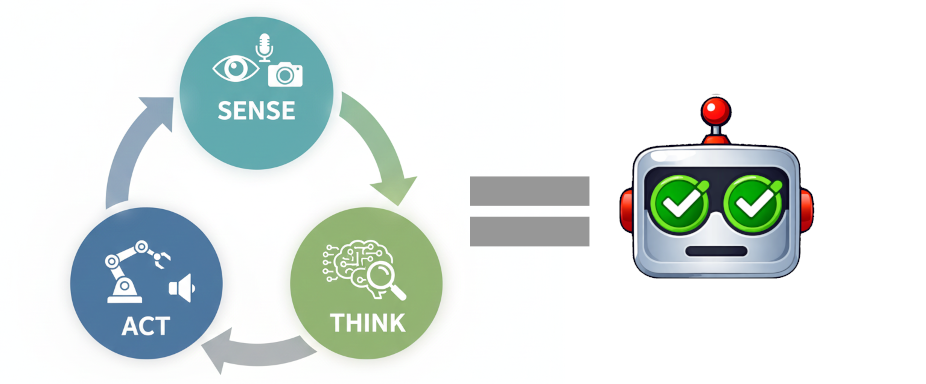
I call it the Sense–Think–Act cycle, based on a methodology widely used in 1985.
Sense
Does it have sensors to perceive the world?
Examples include:
- Cameras
- Microphones
- Temperature probes
- Motion detectors
- Touch sensors
If it can't sense anything, it's blind, deaf, and clueless. That's a strike.
Think
Does it process information and make decisions?
This doesn't require artificial intelligence or self-awareness. It can be as simple as:
- “If the water is dirty, run longer.”
- “If I detect an obstacle, turn left.”
- “If the temperature drops, turn on.”
If it can't think, it might just be a sensor with a switch. Another strike.
Act
Does it physically affect the world based on that decision?
Turning motors, opening valves, moving wheels, adjusting force—something has to happen beyond a notification.
If it only thinks but never acts, it's just a nervous system with no muscles.
The Core Idea
If a device can sense, think, and act in a closed loop, it starts to earn the right to be called a robot.
Starts to. Not automatically and you'll see this accross the site.
Why There Are No Easy Answers
You won't find many clean yes-or-no answers here and that's the nature of the debate.
Some devices:
- Sense and act, but don't really think.
- Think and sense, but rely on humans to act.
- Act automatically, but only in pre-programmed ways.
- May have been called a robot in the past but not anymore.
These are the gray areas, and frankly, they're the most interesting part.
A washing machine from 1995? Probably just a machine.
A modern washer/dryer combo with turbidity sensors and adaptive cycles? Now we're talking.
A thermostat that learns your habits? That's a fight waiting to happen.
Common Starting Point
Today's “smart appliance” is tomorrow's robot. The line is moving, whether we like it or not. The ever-changing definition of a robot keeps the converstion fresh and interesting.
As long as we all use the same methodology, we can have a friendly debate on Is It a Robot?.