Are Transformers Robots or Living Beings?
Transformers blur the line between robots and living beings. We analyze Autobots and Decepticons using the Sense–Think–Act framework to see what they really are.
Robot Conundrum
6/4/2025
What happens when we intertwine robots and living beings?
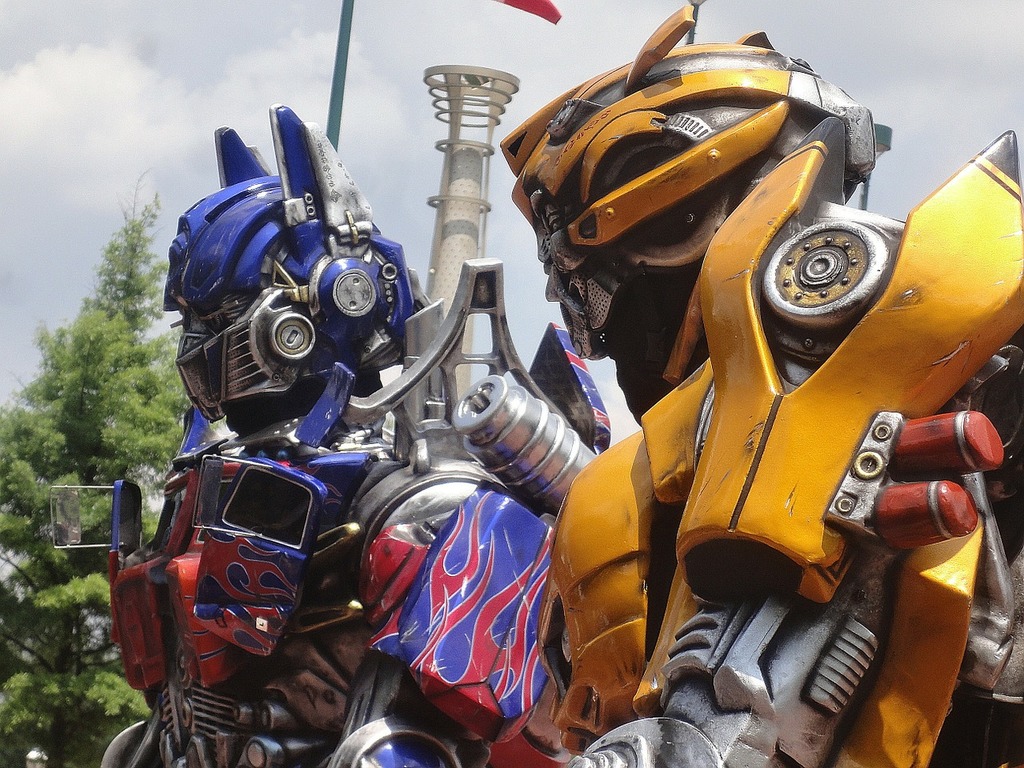
Few fictional creations cause as much category confusion as the Transformers. They're made of metal. They turn into vehicles. They have laser cannons for arms. By every visual cue, they scream “robot.”
And yet, they also talk about honor, loyalty, fear, love, and death. They have names, personalities, friendships, and trauma. Some of them even age. Others reproduce. A few die in ways that feel uncomfortably permanent.
So what exactly are we dealing with here?
Are the Transformers just very advanced robots, or are they something closer to a non-human form of life that happens to be mechanical?
Why This Question Matters
On the surface, this might seem like a purely sci-fi debate. But it touches a real nerve in how we think about robots.
When people worry about robots becoming “alive,” they are rarely thinking about factory arms or dishwashers. They're thinking about beings like Optimus Prime: machines with minds, values, and inner lives.
So let's break this down carefully, using the same framework we apply to real-world machines.
The Robot Test: Sense–Think–Act
To qualify as a robot on Is It a Robot?, something must complete the Sense–Think–Act loop in the physical world.
Sense
Transformers clearly sense their environment.
- They see, hear, and detect threats
- They perceive damage to their own bodies
- They recognize individuals and symbols
No debate here. Their sensory capabilities rival or exceed those of humans.
Think
This is where Transformers stop looking like normal robots.
They don't just follow instructions or optimize tasks. They:
- Reason about morality
- Make independent strategic decisions
- Experience doubt, loyalty, and regret
They are not executing a mission script. They are choosing sides, questioning authority, and sometimes disobeying orders on ethical grounds.
Act
Transformers act decisively in the physical world.
- They fight
- They build and repair
- They transform their own bodies at will
Their actions are purposeful, adaptive, and often creative.
So Are They Robots?
Technically, yes. Transformers meet and exceed every mechanical requirement for being robots.
But here's the problem: the word “robot” usually implies something that was built as a tool.
Transformers were not built to serve humans. In most canon versions, they:
- Evolved on Cybertron
- Have their own society and history
- Predate human technology
That pushes them out of the “machine” category and into something else entirely.
The Case for Transformers as Living Beings
They Are Born, Not Manufactured
In many Transformers continuities, new Cybertronians are created through sparks, forging processes, or energy-based reproduction.
This isn't assembly-line manufacturing. It's closer to biological reproduction, just with metal instead of flesh.
They Have Consciousness
Transformers possess what looks very much like consciousness.
- Self-awareness
- Personal identity
- Emotional depth
They don't just act intelligent. They appear to experience the world.
They Can Die
Death in the Transformers universe is not a reboot or shutdown. It is often final.
That permanence matters. It suggests individuality and mortality, traits we usually associate with living beings.
The Case Against: Why They're Still Not “Alive” in the Human Sense
No Biology
Transformers do not have cells, DNA, or organic metabolism. Their bodies are mechanical and energy-based.
If you define life strictly in biological terms, they don't qualify.
Designed, Not Naturally Evolved
Even when they evolve, their origins are often tied to advanced technology or cosmic engineering.
They are not the result of natural selection in the way Earth life is.
The Gray Area: Mechanical Life
Transformers occupy a category that real-world robotics has not reached: mechanical life.
They are:
- Artificial in material
- Natural in behavior
- Autonomous in purpose
If they existed in our world, we would likely invent an entirely new classification for them.
The Verdict
So what are the Transformers?
- As machines: Robots
- As individuals: Living beings
- As a category: Artificial life forms
Calling them “just robots” undersells what they are. Calling them biological beings misses the point of their mechanical nature.
Conclusion
Transformers reveal something important about how we define robots.
We tend to think of robots as tools first and beings second. The Transformers flip that assumption. They are beings first, who happen to be mechanical.
For now, they remain fiction. But as real robots grow more autonomous and expressive, the uncomfortable questions they raise may not stay fictional forever.