Do Roombas and Robot Mowers Really Count as Robots?
Is a Roomba actually a robot, or just a smart appliance? We analyze robot vacuums, lawn mowers, pool cleaners, and mopping robots using the Sense–Think–Act framework.
Robot Conundrum
10/10/2025
The Little Disk That Started a Big Argument
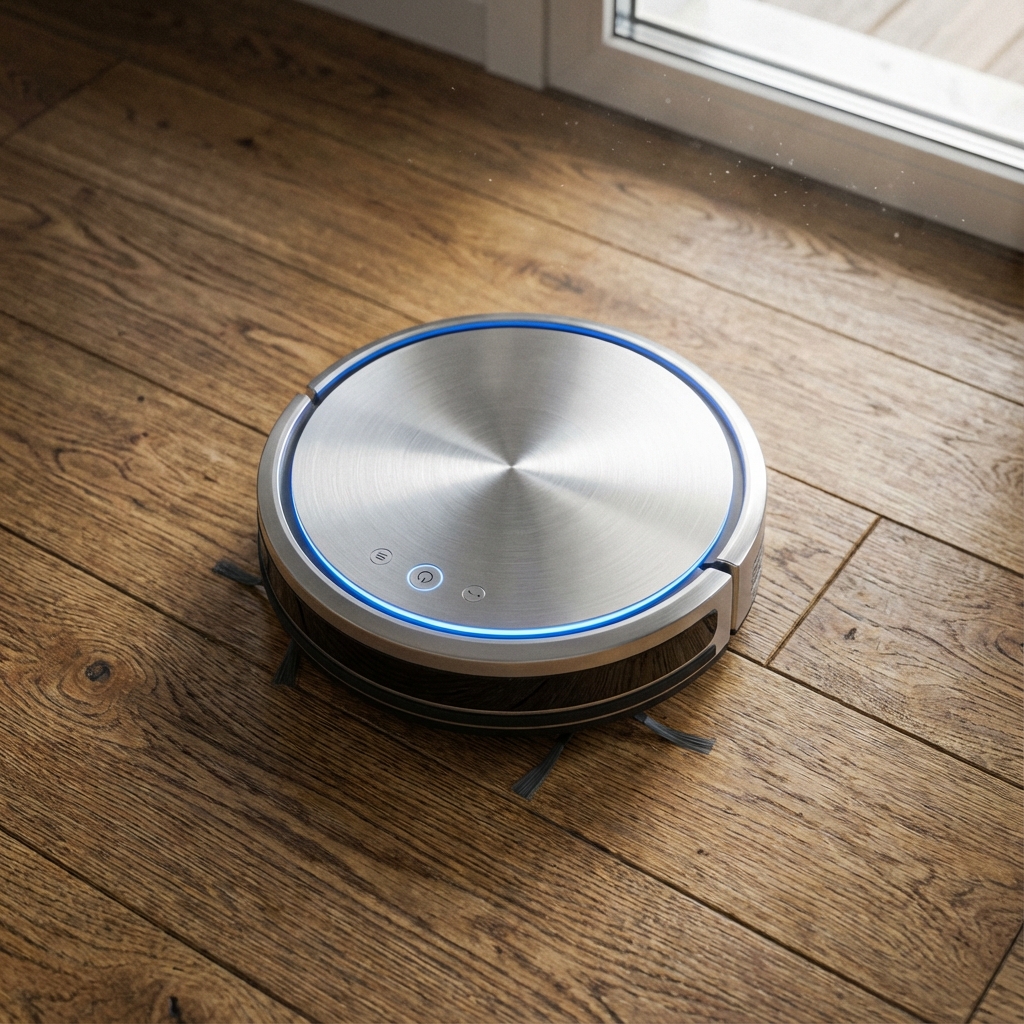
For many people, the Roomba was their first encounter with a “robot” that lived in their home. It didn't look like a humanoid assistant. It didn't talk. It mostly bumped into furniture and occasionally got stuck under a couch.
And yet, it moved on its own. It made decisions. It cleaned without being told where to go.
That was new.
Since then, Roombas have multiplied into an entire category: robot lawn mowers, pool-cleaning robots, and mopping robots that quietly roam your floors while you ignore them.
Manufacturers call them robots. Skeptics roll their eyes.
So let's settle this properly.
Are these devices really robots, or just clever appliances with wheels?
We define robots using a simple but powerful test: the Sense–Think–Act cycle. If a system completes this loop in the real world, we're at least in robot territory.
The Roomba (Robot Vacuum)
Sense: More Aware Than It Looks
Early Roombas were famously clumsy, but even the first models had sensors:
- Bump sensors to detect obstacles
- Cliff sensors to avoid stairs
- Wheel encoders to track movement
Modern robot vacuums go much further:
- Cameras or lidar for room mapping
- Dirt sensors to focus on dirty areas
- Gyroscopes and accelerometers for navigation
Sense: Yes.
Think: From Random to Planned
Early models followed simple algorithms: bounce, turn, repeat.
Newer models build maps, remember rooms, plan routes, and adapt their behavior based on what they detect.
This is decision-making, even if it's not intelligence in the human sense.
Think: Yes.
Act: Cleaning Is Physical Work
A Roomba:
- Drives itself
- Spins brushes
- Applies suction
It physically alters its environment by removing dirt.
Act: Yes.
Roomba Verdict
Verdict: Robot
A Roomba is a textbook example of a simple autonomous robot operating in an unpredictable environment.
Robot Lawn Mowers
Sense: Boundaries and Obstacles
Robot lawn mowers typically rely on:
- Boundary wires or GPS to define work areas
- Obstacle sensors to avoid collisions
- Incline sensors to handle slopes
They may not “see” the world in detail, but they know where they are allowed to go.
Sense: Yes.
Think: Persistent Autonomy
These machines decide:
- When to mow
- Where to go next
- When to return to charge
They adapt to lawn size, battery level, and obstacles.
Think: Yes.
Act: Blades and Motion
They move across grass and cut it without human control.
Act: Very much yes.
Robot Lawn Mower Verdict
Verdict: Robot
If autonomy counts, robot lawn mowers easily qualify.
Pool-Cleaning Robots
Sense: A Simpler World
Pool robots operate in a constrained environment, but they still sense:
- Water flow and resistance
- Walls and floor boundaries
- Cable tension or orientation
Sense: Yes.
Think: Patterned but Adaptive
Most pool-cleaning robots follow coverage patterns while adjusting when they hit walls or stairs.
They don't map like advanced vacuums, but they still respond to feedback.
Think: Yes, at a basic level.
Act: Scrubbing the Environment
They:
- Drive along pool surfaces
- Scrub walls
- Filter debris
Act: Yes.
Pool Robot Verdict
Verdict: Robot
Even with limited intelligence, these devices autonomously perform physical work.
The Verdict Across the Board
- Roomba: Robot
- Robot lawn mower: Robot
- Pool-cleaning robot: Robot
- Mopping robot: Robot
They may be simple, specialized, and unglamorous—but they are robots in the most practical sense of the word.
What This Says About Robots Today
The most common robots in the world don't look impressive.
They clean floors, cut grass, and scrub walls.
And that's the point.
Robots aren't here to impress us. They're here to do chores we don't want to do.
Once you accept that, the Roomba debate becomes much easier to settle.